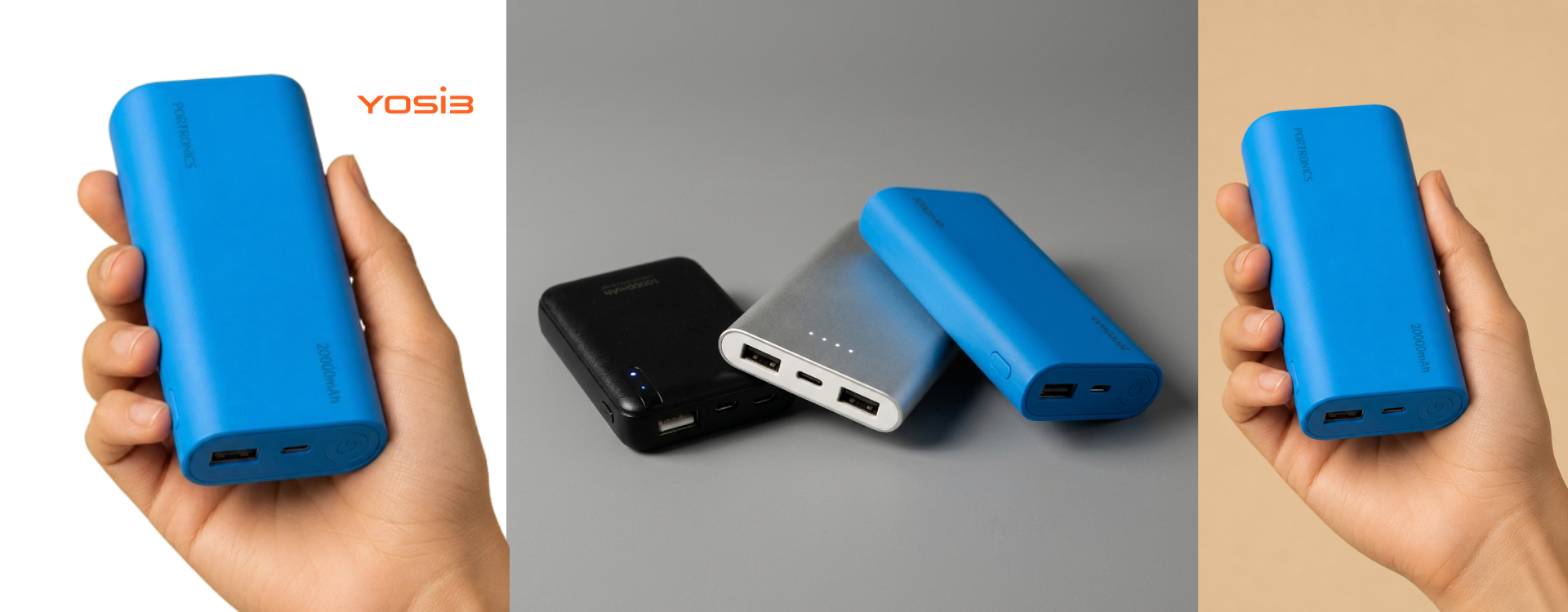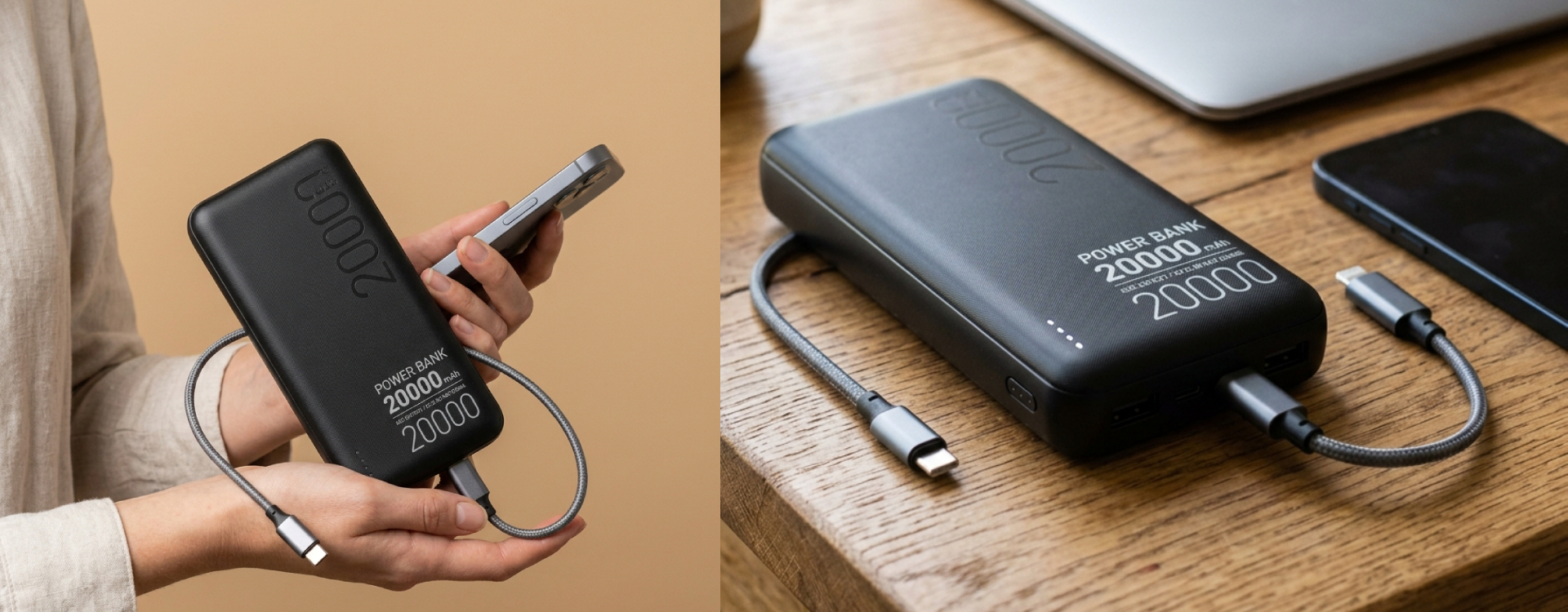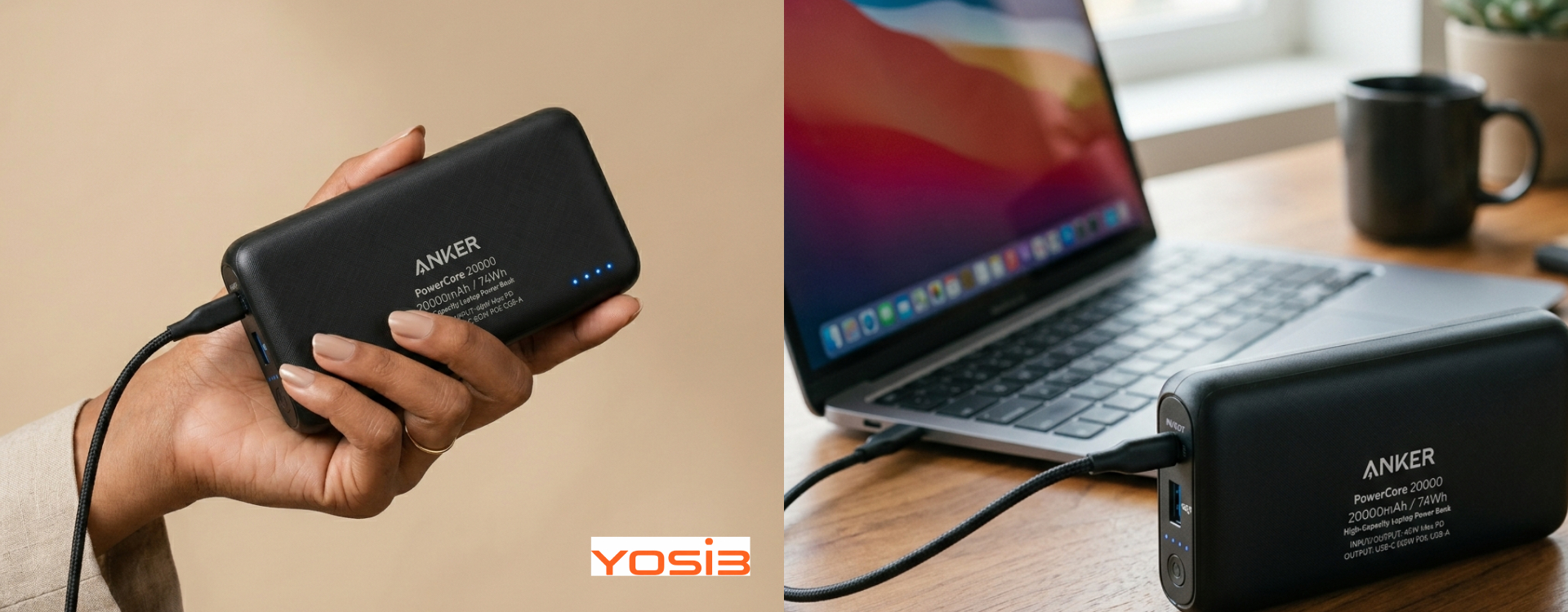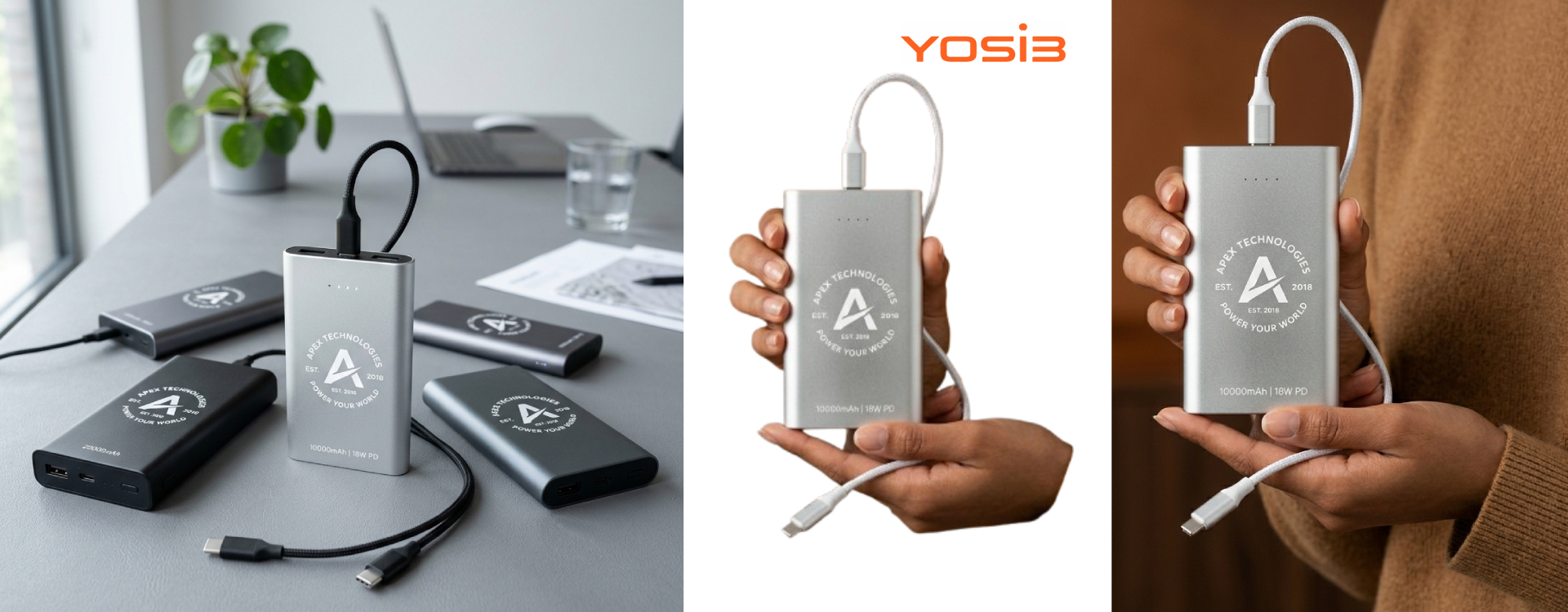
In the rapidly evolving landscape of B2B marketing and corporate branding, the battle for consumer attention has shifted toward high-utility, long-lasting promotional products. As we navigate through 2025, businesses are realizing that traditional advertising channels are becoming saturated, prompting a strategic pivot toward items that offer genuine value to the recipient. Among these, portable charging technology has emerged as a critical asset for professionals and consumers alike. This guide explores how leveraging custom powerbanks can significantly elevate your brand presence, providing a comprehensive overview of sourcing, customization, and strategic application in the wholesale market.
1. Why Custom Powerbanks Are Essential for Modern Branding Strategies
In an era where digital connectivity dictates the pace of business, keeping devices powered is no longer just a convenience—it is a critical operational necessity. The modern consumer and business professional are constantly on the move, relying heavily on smartphones, tablets, and laptops to stay connected. For brands, this presents a unique opportunity to insert themselves into the daily lives of their clients through utility. By investing in custom powerbanks, companies are not just giving away a gadget; they are providing a lifeline that ensures the recipient remains productive and connected. This consistent utility transforms a simple promotional item into a powerful branding tool that reinforces the company’s commitment to supporting its partners’ and customers’ lifestyles.
The psychological impact of receiving a high-quality gift cannot be overstated in B2B and B2C marketing. When a business provides a solution to a common problem—battery anxiety—it builds immediate goodwill. Unlike pens or flyers that are often discarded, a custom branded power bank serves a distinct, repetitive purpose. Every time a client reaches for a charge, they are physically interacting with the brand. This repeated exposure creates a subconscious bond of trust and reliability. In the wholesale market, where relationships are paramount, offering such a valuable item can set a company apart from competitors who stick to generic, low-impact marketing materials.
Furthermore, the visual real estate offered by these devices allows for sophisticated brand representation. A power bank is not a small sticker; it is a substantial object with a surface area that accommodates logos, slogans, and contact details in high definition. This means businesses can maintain their brand identity with precision, ensuring colors are accurate and designs are professional. For a power bank factory producing these items at scale, the ability to replicate complex brand designs across thousands of units is a standard capability. This ensures that whether a company orders fifty units for a specific event or five thousand for a large-scale conference, the brand representation remains consistent, polished, and aligned with the company’s marketing standards.
Looking toward the future of marketing, utility-based advertising is rapidly outperforming traditional media. Recent industry data suggests that promotional products with high utility are kept for an average of 8 months, significantly longer than other categories. In 2025, as digital ad costs continue to rise, physical touchpoints offer a tangible return on investment. By integrating custom powerbanks into a marketing strategy, businesses are essentially investing in a long-term advertising channel that travels with the client. Whether it is in a boardroom, at a trade show, or in an airport lounge, the brand gains visibility in diverse environments, amplifying its reach without recurring costs.
1.1. Why High Utility Drives Higher Brand Recall
The fundamental principle of successful marketing is frequency of impression, and few items offer the frequency of a portable charger. A custom branded power bank is typically used multiple times a week, if not daily, ensuring that the brand logo is viewed repeatedly over an extended period. Market research from 2025 indicates that 83% of consumers can recall the brand advertised on a promotional product they received in the last two years, compared to much lower recall rates for digital or print ads. This high retention rate is driven by the item’s utility; because the product solves a problem—the need for power—it is cherished and kept within reach, rather than thrown in a drawer.
For businesses engaging in wholesale procurement, understanding this retention is crucial for maximizing marketing budgets. Purchasing custom powerbanks in bulk allows companies to distribute high-value items across various client touchpoints. Whether included in welcome kits for new employees or handed out as executive gifts, the utility ensures the item remains in the user’s ecosystem. Unlike perishable or low-cost items, these chargers have a lifespan that often spans years. This longevity means the cost per impression decreases dramatically over time, offering a superior return on investment compared to short-term advertising campaigns that disappear the moment the budget stops.
The emotional connection formed through utility also plays a significant role in brand recall. When a client’s device battery is low, and they successfully use a branded charger to regain power, there is a moment of relief and gratitude associated with that brand. This positive reinforcement builds a narrative of reliability and support. A power bank factory focused on quality ensures that the internal components, such as the lithium-ion batteries and PCBs, are reliable, preventing the negative association that would arise from a faulty product. Therefore, high utility combined with high quality creates a potent mix for lasting brand memory.
Moreover, the portability of these devices means they travel with the user, extending brand reach beyond the initial point of contact. A custom branded power bank taken on a business trip or a vacation acts as a mobile billboard, exposing the brand to new audiences in coffee shops, airports, and hotels. This organic exposure is invaluable. As businesses look toward 2026 market insights, the trend of “mobile lifestyles” is only expected to grow, making portable power an increasingly essential commodity. By aligning the brand with this essential need, companies ensure their message remains relevant and top-of-mind for a mobile-first generation.
1.2. How Customization Enhances Professional Perception
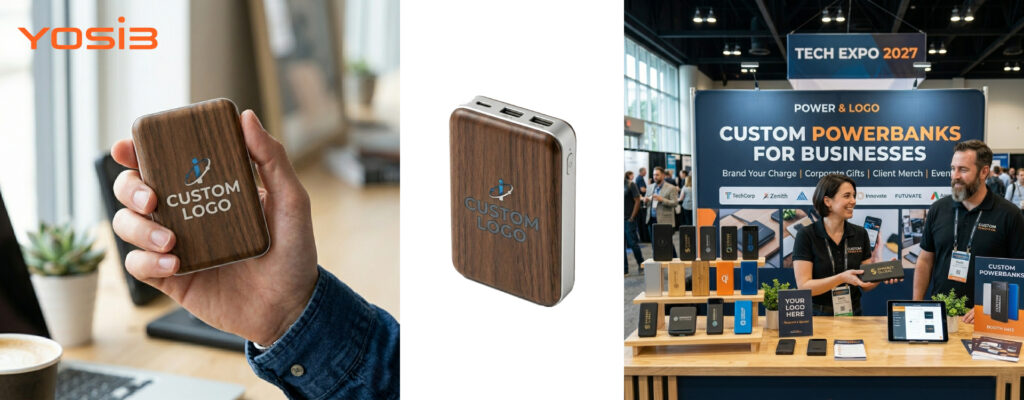
Customization goes beyond merely slapping a logo on a plastic case; it is about reflecting the brand’s identity and values through physical design. In the wholesale and B2B sector, the perception of professionalism is paramount. A generic, low-quality charger can reflect poorly on a company, suggesting a lack of attention to detail. Conversely, a custom powerbank that features a sleek design, premium materials, and a high-quality finish communicates excellence and sophistication. Businesses can choose from a variety of materials, such as aluminum, ABS plastic, or even eco-friendly bamboo, to align the product with their corporate identity and sustainability goals.
The process of working with a power bank factory allows for deep levels of customization that can tailor the product to specific campaign needs. This includes selecting specific battery capacities—from 5,000 mAh for compact daily carry to 20,000 mAh for heavy users—and choosing output configurations that match the tech-savviness of the target audience. For instance, a tech company might opt for power banks with fast-charging PD (Power Delivery) technology and multiple ports, demonstrating their industry leadership. By offering a product that is not only branded but also technologically relevant, the business enhances its perception as an innovative and forward-thinking partner.
Color customization is another critical factor in maintaining brand consistency. Brand guidelines are strict for a reason; consistency builds recognition. When ordering custom powerbanks, businesses are not limited to standard black or white models. Reputable manufacturers offer Pantone matching, ensuring that the charger perfectly matches the company’s brand colors. This level of detail reinforces brand identity every time the user looks at the device. It transforms the power bank from a generic utility tool into a cohesive piece of the brand’s visual ecosystem, strengthening the visual association between the color scheme and the company.
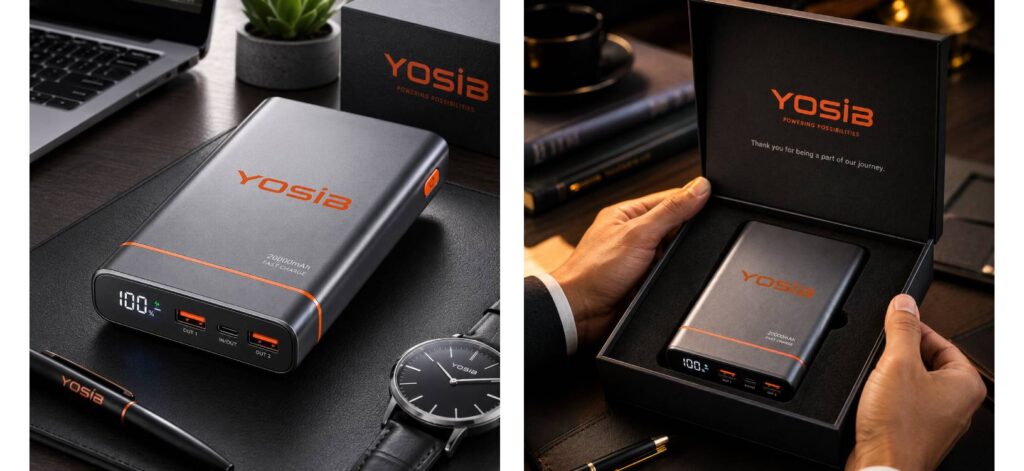
Furthermore, packaging customization plays a subtle yet effective role in professional perception, especially in wholesale gifting scenarios. The unboxing experience sets the tone for the recipient. A custom branded power bank presented in a custom-printed box with magnetic closure or a premium gift bag adds a layer of prestige and thoughtfulness. This is particularly important for executive gifts or high-value client appreciation events. In 2025, the unboxing experience continues to be a vital marketing touchpoint, often shared on social media by recipients, thereby providing additional organic reach and enhancing the brand’s image as a premium entity.
1.3. Which Customization Options Offer the Best ROI
When navigating the myriad options for promotional products, understanding which customization features offer the best return on investment is essential for budget-conscious procurement teams. Not all customizations add equal value. For custom powerbanks, the most significant ROI driver is the print quality of the logo. A full-color, high-resolution UV print or a laser-engraved logo ensures that the branding remains pristine for the life of the product. While pad printing is a cost-effective option for large batches, modern techniques like DTF (Direct to Film) or engraving offer superior durability and aesthetics, ensuring the brand image does not fade or scratch off after a few months of use.
Another high-ROI customization is the selection of battery capacity relative to the target audience’s usage patterns. Over-specifying features can unnecessarily inflate costs, while under-specifying can lead to a product that fails to charge devices effectively, harming the brand’s reputation. A reliable power bank factory will provide expert consultation on the ideal mAh (milliampere-hour) rating for the intended demographic. For example, 10,000 mAh is often considered the “sweet spot” for general business use, offering enough power to charge a smartphone 2-3 times without being too bulky or heavy. Selecting the right capacity ensures the product is genuinely useful without overspending on excessive power that goes unused.
Unique functional add-ons can also provide a strong ROI by differentiating the gift from competitors. Features such as built-in cables, wireless charging pads, or integrated LED flashlights add significant utility and perceived value. A custom branded power bank with built-in Lightning and USB-C cables eliminates the need for the user to carry separate cords, dramatically increasing the likelihood that the device will be used regularly. In the wholesale market, these multi-functional devices are highly sought after because they solve multiple problems at once, making them a favorite among corporate clients who want to give a gift that is both impressive and practical.
Finally, considering the total cost of ownership versus the lifespan of the product is vital for calculating ROI. High-quality custom powerbanks may have a higher upfront unit cost compared to cheaper alternatives, but their longevity and reliability mean they generate more impressions over time. Market insights for 2026 suggest that consumers are becoming more discerning about the quality of electronic goods, moving away from disposable “fast tech” toward durable, sustainable options. Investing in higher-quality components and better customization techniques ensures the product survives the test of time, thereby lowering the cost per impression and maximizing the overall marketing investment.
2. How Sourcing from a Power Bank Factory Optimizes Cost and Quality
For businesses looking to order custom powerbanks in significant quantities, the supply chain model chosen can make or break the project’s success. Sourcing directly from a manufacturer rather than a middleman or generic retailer offers distinct advantages in terms of cost control and quality assurance. A specialized power bank factory operates on economies of scale, meaning they can produce large orders at a fraction of the cost it would take to assemble them piecemeal. This direct relationship eliminates the markups added by distributors, allowing wholesale buyers to allocate their budget more effectively, either by increasing the order volume or upgrading the product specifications.
Beyond mere cost savings, direct factory access provides unparalleled transparency regarding the components used inside the devices. The market is unfortunately flooded with substandard batteries that can be safety hazards. By partnering with a reputable manufacturer, businesses can insist on Grade A lithium-ion cells and high-quality PCBA (Printed Circuit Board Assembly) that include essential safety features like overcharge protection, short-circuit prevention, and temperature control. This level of scrutiny is crucial for maintaining brand reputation, as a malfunctioning promotional product can cause more damage to a brand’s image than a good product can repair. Direct oversight ensures that every custom branded power bank meets rigorous safety and performance standards.
The logistical efficiency of dealing directly with a factory also significantly benefits B2B procurement. Wholesale orders often involve tight deadlines, especially when tied to product launches, trade shows, or conference dates. A power bank factory is equipped to handle large-scale production runs with streamlined workflows and dedicated quality control lines. They can provide accurate production timelines and adhere to strict delivery schedules. This reliability is invaluable for marketing teams who need to coordinate campaigns. The ability to track the production process from raw materials to finished goods ensures that there are no last-minute surprises, allowing for seamless execution of marketing strategies.
Additionally, factories are often at the forefront of the latest technological advancements in portable power. They are the first to know about new battery chemistries, faster charging protocols, and more efficient chipsets. When a business sources custom powerbanks directly from the source, they gain access to this innovation before it trickles down to general retail channels. In 2025, with the rise of GaN (Gallium Nitride) charging technology and smaller form factors with higher capacities, working directly with a factory ensures that a brand is handing out cutting-edge tech rather than obsolete models. This positions the brand as a leader rather than a follower in the eyes of their clients.
2.1. How Factory Direct Wholesale Pricing Works
The economics of wholesale purchasing are governed by volume, but understanding the breakdown of manufacturing costs can help businesses negotiate better deals. When sourcing custom powerbanks, the price per unit is determined by several factors: the battery capacity, the casing material, the complexity of the customization, and the order quantity. A power bank factory typically offers tiered pricing structures. As the order quantity increases, the setup costs for printing and mold usage are amortized over a larger number of units, resulting in a lower cost per item. For businesses planning their annual marketing budget, consolidating orders into larger batches can yield significant savings.
Raw material costs fluctuate based on global markets, particularly for lithium and cobalt used in batteries. However, established factories often hedge these costs or have long-term supply contracts, offering more stable pricing to their wholesale partners. By engaging in a direct dialogue with the manufacturer, businesses can lock in prices for future orders, protecting their budget from volatility. Furthermore, factories can offer alternative material suggestions to meet specific price points without compromising structural integrity. For example, swapping a premium aluminum shell for a high-grade, durable ABS plastic with a rubberized finish can reduce costs while still maintaining a premium feel for the custom branded power bank.
It is also important to understand the distinction between “fixed costs” and “variable costs” in the production process. The customization setup, such as creating the printing screens or molds for a custom-shaped housing, is a fixed cost. In a direct factory model, these setup fees are often waived or significantly reduced once a certain order threshold is met. Retailers, on the other hand, often pass these fees on to the client with a premium. By going direct, businesses only pay for the raw materials and labor required to assemble the custom powerbanks, ensuring that every dollar spent goes directly into the physical product rather than administrative overhead.
Finally, factories often have flexible production capabilities that allow for “mixed batches.” This is a strategic advantage for businesses that require different styles or capacities for different segments of their audience. Instead of placing multiple separate orders, a wholesale buyer might order 1,000 slim credit-card-sized power banks for executives and 2,000 rugged, high-capacity models for field staff. A power bank factory can often run these as a single production project, applying the highest volume tier pricing to the total count, thereby optimizing the cost across the entire marketing suite.
2.2. Why Quality Control is Critical for Bulk Orders
When ordering custom powerbanks in bulk, the stakes are high. A single bad batch can lead to thousands of dissatisfied recipients, causing a PR nightmare. Quality control (QC) in a factory setting is not just about checking the final product; it is a process that starts with component inspection. Reputable manufacturers perform incoming quality control (IQC) on all batteries and chips before they enter the assembly line. This ensures that the core of the custom branded power bank is reliable. For B2B clients, asking for a factory’s QC protocol is a standard part of the vetting process. Transparency regarding testing procedures builds confidence and mitigates the risk of product failure.
During the production phase, in-process quality control (IPQC) monitors the assembly lines. Technicians check for correct soldering, secure fitting of internal components, and alignment of casings. This is particularly important for customized items. For instance, if a power bank factory is producing a unit with a specific logo placement, automated optical inspection (AOI) cameras or human inspectors verify that the printing is aligned and free of defects on every single unit. Catching errors during production is far more cost-effective than discovering them after 5,000 units have been shipped and packaged. Wholesale buyers should look for factories that offer video or photo updates of the production line to monitor this phase.
Final quality control (FQC) is the last line of defense before packing. This involves a series of stress tests, including drop tests, button durability tests, and actual charging cycle tests. Random sampling is often conducted based on AQL (Acceptance Quality Limit) standards, an industry benchmark for determining the acceptability of a production batch. For businesses investing in custom powerbanks, insisting on an AQL report is a smart move. It provides a statistical assurance that the defect rate is within an acceptable range (e.g., 0.65 for major defects). This rigorous scrutiny ensures that the end user receives a product that works flawlessly, reflecting positively on the brand.
Furthermore, safety certifications are a non-negotiable aspect of quality control in the electronics industry. Products must comply with regional standards such as CE, FCC, RoHS, and UL. A reliable power bank factory will have these certifications readily available for their product lines. These documents verify that the devices have been tested by independent laboratories and meet strict safety and environmental standards. In the B2B sector, especially when dealing with large corporations or educational institutions, providing proof of these certifications is often a prerequisite for the contract. It confirms that the custom branded power bank is a safe, compliant, and high-quality product.
2.3. Which Factors to Consider When Choosing a Manufacturer
Selecting the right manufacturing partner is a strategic decision that impacts product quality, delivery times, and ultimately, customer satisfaction. The first factor to consider is the factory’s production capacity and lead times. A power bank factory that is too small may struggle to fulfill a large wholesale order quickly, while a massive factory might not prioritize smaller, highly custom batches. Businesses should assess the factory’s monthly output and ensure it aligns with their volume requirements. Additionally, checking the factory’s lead times for standard orders versus rush orders is crucial for planning marketing events with hard deadlines.
Experience in the specific niche of customization is another vital consideration. Not all electronics factories are equipped to handle detailed branding. A factory that specializes in custom powerbanks will have advanced printing machinery and experienced designers who can advise on the best way to render a logo on a curved surface or a metallic texture. They should be able to provide digital mock-ups and physical pre-production samples (golden samples) for approval before the full run begins. This expertise prevents costly mistakes and ensures the final product matches the vision. Reviewing their portfolio of past work for similar clients can provide tangible evidence of their capabilities.
Communication and responsiveness are the glue that holds an international supply chain together. The ideal manufacturer should have a dedicated project management team that communicates clearly in the business’s language. Delays or misunderstandings often stem from poor communication. When sourcing custom powerbanks, the ability to discuss technical specifications, customization details, and shipping logistics transparently is essential. A factory that asks probing questions about the intended use of the product or the target demographic is demonstrating a partnership mentality rather than just a transactional one. This engagement often leads to a better final product and a smoother procurement process.
Finally, compliance and ethical manufacturing practices are increasingly important in the B2B decision-making process. Companies are under pressure to ensure their supply chains are free from forced labor and adhere to environmental standards. Auditing a power bank factory for certifications like ISO 9001 (Quality Management), ISO 14001 (Environmental Management), and SA8000 (Social Accountability) provides assurance that the facility operates ethically and sustainably. For brands positioning themselves as responsible corporate citizens, ensuring that their promotional merchandise is produced in an ethical factory is not just a “nice-to-have”—it is a necessity to maintain brand integrity and trust.
3. Which Trends Are Shaping the Custom Powerbank Market in 2025-2026
The landscape of portable power is dynamic, driven by rapid advancements in battery technology and shifting consumer preferences. As we look at the market insights for 2025 and beyond, one of the most prominent trends is the integration of GaN (Gallium Nitride) technology. Unlike traditional silicon chargers, GaN components are smaller, more efficient, and generate less heat. This allows manufacturers to produce custom powerbanks that are significantly more compact yet capable of delivering higher wattages. For businesses, this means offering a sleeker, more modern promotional item that aligns with the latest tech trends, enhancing the brand’s image as innovative and current.
Sustainability continues to move from a niche preference to a core demand, influencing material choices and product lifecycle management. The “green” revolution is reshaping the power bank factory landscape, with a surge in the use of recycled plastics, biodegradable materials, and housing made from materials like wheat straw or bamboo. Furthermore, there is a growing trend toward modular designs that make battery replacement easier, extending the product’s life and reducing e-waste. For B2B clients focusing on Corporate Social Responsibility (CSR), opting for eco-friendly custom branded power banks is a tangible way to demonstrate their commitment to the environment, resonating deeply with eco-conscious clients and partners.
Another significant trend is the rise of “smart” charging features. Consumers now expect intelligent power management that optimizes charging speed based on the device connected. Power banks that can automatically detect whether a phone, tablet, or laptop is plugged in and adjust the amperage accordingly are becoming the standard. Additionally, features like pass-through charging, which allows the power bank to charge its own battery while charging a device, are highly valued. When procuring custom powerbanks for wholesale, prioritizing these smart features ensures the product remains competitive in a market saturated with older, less intelligent models. The perceived value of a “smart” gift is significantly higher.
Wireless charging technology is also maturing, becoming faster and more ubiquitous. The demand for cables is diminishing, and users appreciate the simplicity of placing their device on a pad to charge. Consequently, power banks that combine wired fast-charging ports with high-speed wireless charging surfaces are gaining immense popularity. These hybrid units are versatile and future-proof. For a brand, associating with this kind of cutting-edge convenience is powerful. A power bank factory that integrates Qi-certified wireless charging coils into their custom designs is catering to the modern desire for a tangle-free, seamless user experience, making the promotional product highly desirable.
3.1. Why Sustainable and Eco-Friendly Models Are in Demand
The global push toward sustainability is no longer just a buzzword; it is a decisive purchasing factor. In 2025, data shows that 73% of global consumers would change their consumption habits to reduce their environmental impact. This shift in consumer consciousness is directly affecting the promotional products industry. Businesses are increasingly held accountable for the “swag” they produce, and disposable plastic items are falling out of favor. Custom powerbanks made from post-consumer recycled plastics or sustainably sourced materials offer a responsible alternative. They signal that the brand is listening to the market’s concerns and is taking actionable steps to reduce its carbon footprint.
Using eco-friendly materials does not imply a sacrifice in quality or aesthetics. Modern manufacturing processes have advanced to the point where recycled ABS plastic can be just as durable and sleek as virgin plastic. Additionally, natural materials like bamboo or cork offer a premium, organic texture that stands out. A power bank factory specializing in green technology can produce custom branded power banks that look and feel luxurious while being kind to the planet. These unique textures and finishes often provide a better canvas for branding, offering a distinct contrast that makes logos pop. The story behind the product—that it is eco-friendly—becomes a talking point, adding depth to the brand’s narrative.
Corporate Social Responsibility (CSR) reports are becoming standard reading for investors and partners. A company’s procurement strategy is a visible indicator of its values. By choosing sustainable custom powerbanks, a business creates a tangible proof point for its sustainability goals. It moves the commitment from a report page to the hands of its stakeholders. This alignment is crucial for B2B relationships, where shared values often underpin long-term partnerships. When a company hands out an eco-friendly charger at a conference, it reinforces its brand identity as a responsible corporate citizen, differentiating it from competitors who may still be utilizing cheaper, non-sustainable alternatives.
Furthermore, regulatory trends are tightening around electronic waste. Governments are beginning to enforce stricter regulations on the disposal and recyclability of electronic goods. Future-proofing a marketing strategy involves anticipating these regulations. By investing in sustainable electronics now, businesses avoid the risk of their promotional merchandise becoming non-compliant or a liability down the line. Sourcing custom powerbanks that are RoHS (Restriction of Hazardous Substances) and WEEE (Waste Electrical and Electronic Equipment) compliant ensures that the product meets current environmental standards. Forward-thinking brands are using these compliant products not just to follow the law, but to lead the market in ethical branding.
3.2. How Advanced Battery Tech Improves User Experience
The core value proposition of a power bank is its ability to store and deliver energy, and advancements in battery chemistry are revolutionizing this capability. The traditional lithium-ion batteries are being optimized, while lithium-polymer (LiPo) batteries are allowing for thinner, lighter, and more flexible form factors. For the end-user, this means custom powerbanks are no longer heavy bricks to lug around but sleek accessories that fit easily into a pocket or purse. A power bank factory that utilizes the latest high-density LiPo cells can pack more power into a smaller chassis, improving the portability and, consequently, the user experience dramatically.
High-capacity charging is no longer limited to low-wattage phones. The modern professional carries laptops, tablets, and drones that require significant power. The market is seeing a surge in power banks that support 45W, 65W, and even 100W Power Delivery (PD) output. This evolution transforms the custom branded power bank from a phone emergency charger into a legitimate mobile power station for laptops. For a business targeting tech-savvy professionals or remote workers, providing a high-wattage charger that can keep a MacBook running during a long flight is an incredibly valuable gift. It positions the brand as an enabler of productivity and modern work styles.
Safety and longevity are also critical aspects of the user experience, addressed by new battery management systems (BMS). Modern smart chips protect against over-discharging, overheating, and short-circuiting, which are the primary causes of battery degradation. Advanced BMS technology ensures that the custom powerbanks retain their capacity over hundreds of charge cycles. This longevity is vital for the brand; a power bank that dies after three months creates a negative impression. By utilizing factories that incorporate the latest Texas Instruments or Qualcomm control chips, businesses ensure their promotional products remain safe and reliable for the long haul, maintaining a positive brand association.
Another leap in technology is the reduction of charging times for the power bank itself. With the introduction of bi-directional fast charging, users can now recharge their power banks in under an hour, rather than leaving them plugged in overnight. This feature addresses the “charge anxiety” associated with the chargers themselves. In the wholesale market, highlighting these tech specs—such as “30W Fast Recharge”—on the packaging or the custom branded power bank casing adds a layer of technical sophistication. It shows that the brand is not just giving away old tech, but is providing state-of-the-art solutions that respect the user’s time and needs.
3.3. Which Designs and Features Are Most Preferred by Corporate Clients
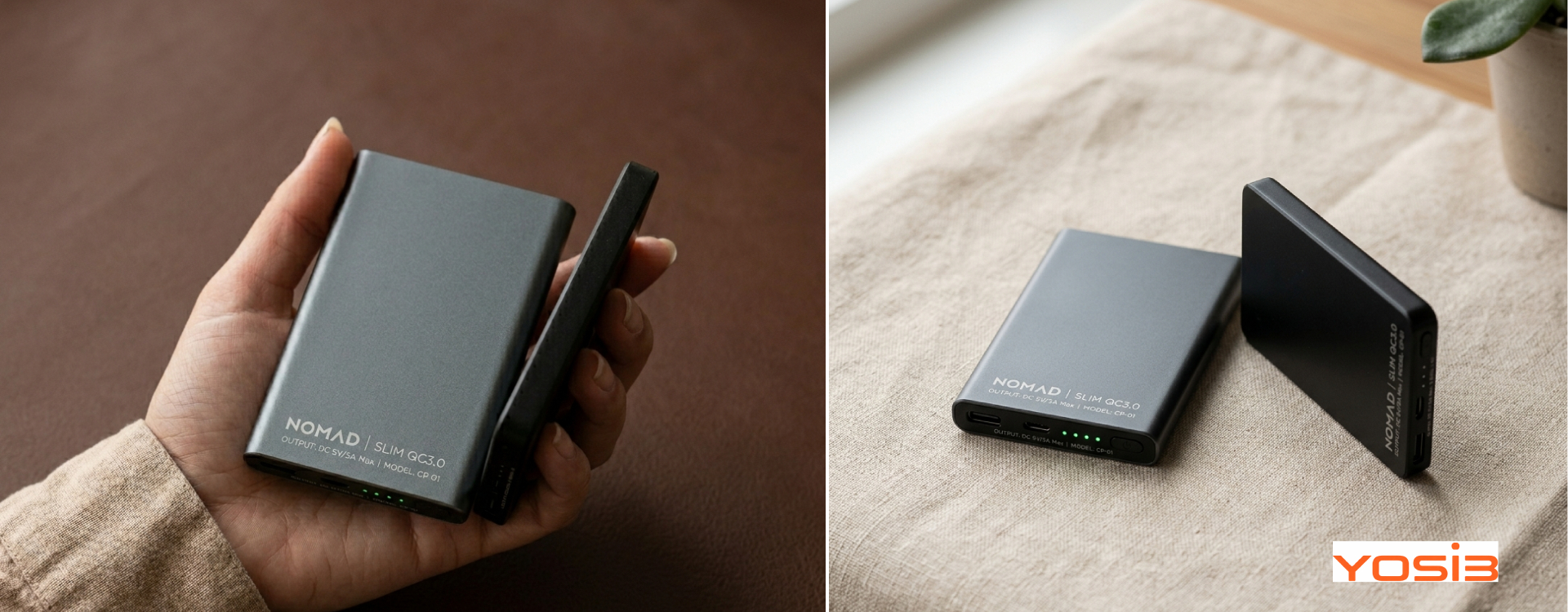
When targeting the B2B sector, the design preferences for custom powerbanks tend to lean toward minimalist, professional aesthetics that fit a corporate environment. While bright colors and fun shapes work for some consumer events, corporate clients generally prefer sleek finishes in matte black, silver, navy blue, or white. The “ultra-slim” card-style design is particularly popular among executives because it slips into a notebook or jacket pocket without adding bulk. A power bank factory catering to the wholesale market will typically offer a range of “executive series” models that prioritize slim profiles and premium textures, such as soft-touch rubberized coatings or anodized aluminum, which convey a sense of high-end quality.
Integration with the modern mobile ecosystem is a key feature preference. Cables are easily lost, making power banks with built-in cables highly sought after. The most preferred designs in 2025 feature 2-in-1 or 3-in-1 built-in cables (Lightning, USB-C, and Micro-USB) that retract or tuck neatly into the body of the device. This all-in-one solution ensures the user always has the correct cable on hand. For a custom branded power bank, this feature drastically increases the likelihood of the device being used daily. It solves the “I forgot my cable” problem, making the promotional gift indispensable rather than optional. In wholesale evaluations, units with built-in cables often show the highest usage rates.
Digital displays are another feature that is gaining traction in the corporate market. Analog LED lights that vaguely indicate battery charge are being replaced by crisp LED digital screens that show the exact percentage of remaining power and input/output wattage. This level of information appeals to the analytical mindset of many business professionals. It adds a “tech-forward” feel to the custom powerbanks. For the brand, a digital screen can also be used to display a scrolling message or the brand name upon startup, offering an extra layer of customization. This combination of utility and high-tech aesthetics makes these devices a favorite for corporate gifting programs.
Finally, packaging design is a critical component of preference for corporate clients who often use these items as gifts. The unboxing experience needs to feel premium. Clamshell packaging, magnetic gift boxes, and custom sleeves are highly preferred over simple polybags. Many businesses also look for custom powerbanks that come with included accessories, such as a braided USB cable or a carrying pouch, to enhance the perceived value. A power bank factory that offers a “gift box solution”—where the power bank, accessories, and a branded thank-you card are beautifully presented—provides a turnkey solution for corporate gifting officers. This attention to detail reflects well on the giving company, making the gifting process seamless and impressive.
Conclusion
In the competitive world of B2B marketing and brand building, the tools one chooses to connect with audiences determine the longevity and depth of those connections. Custom powerbanks have proven to be more than just portable batteries; they are powerful vehicles for brand message, loyalty, and professional goodwill. By leveraging high-utility items that integrate seamlessly into the daily lives of clients and employees, businesses can achieve a level of brand recall that traditional advertising simply cannot match. As we move through 2025 and look toward 2026, the integration of advanced technology, sustainable materials, and sophisticated design in these devices ensures they remain relevant and desirable.
Sourcing directly from a specialized power bank factory unlocks significant advantages, allowing businesses to optimize costs without compromising on quality or safety. This direct procurement model empowers companies to create truly bespoke custom branded power banks that reflect their specific identity, values, and technological aspirations. Whether through the selection of eco-friendly materials that honor a CSR pledge or the incorporation of high-speed GaN charging that showcases an innovative spirit, the customization options are vast and impactful.
For businesses looking to elevate their promotional strategy, the path forward is clear. Investing in wholesale custom powerbanks is a strategic move that offers measurable returns through sustained exposure and enhanced brand perception. It is a decision that positions a brand as reliable, modern, and thoughtful. To ensure your next marketing campaign makes a lasting impact, consider partnering with a manufacturer who understands your vision and can deliver the quality your brand deserves. Contact a reputable manufacturer today to discuss your customization needs and discover how the right portable charging solution can power your brand’s growth.
Frequently Asked Questions
1. Why are custom powerbanks considered a high-ROI investment for B2B marketing?
Custom powerbanks offer a high return on investment because they combine daily utility with prolonged brand exposure. Unlike disposable promotional items like pens or brochures, a custom powerbank is kept for an average of 8 to 12 months, often used multiple times a day. This creates a low cost-per-impression compared to digital ads which disappear once the budget stops. Furthermore, by solving a critical problem—battery anxiety—businesses build positive emotional connections with clients, positioning their brand as helpful and reliable. In the B2B sector, where relationships are key, such a high-value gift can differentiate a company from competitors and foster long-term loyalty.
2. How does ordering directly from a power bank factory benefit my business?
Ordering directly from a manufacturer allows businesses to bypass middlemen, significantly reducing the unit cost while maintaining strict control over quality. A specialized power bank factory can offer tiered wholesale pricing, meaning the more units you order, the lower the price per unit. Direct access also enables greater customization flexibility, such as choosing specific battery capacities, materials, and printing techniques that might not be available through third-party retailers. Additionally, factories provide transparency regarding safety certifications and component sourcing, ensuring that the custom branded power banks you distribute are safe, reliable, and compliant with international standards.
3. Which customization options provide the best brand visibility?
For maximum brand visibility, full-color UV printing or laser engraving are the superior choices. These methods ensure that your logo remains crisp, vibrant, and durable against wear and tear. Beyond the logo itself, selecting a custom powerbank that matches your brand colors using Pantone matching can significantly enhance visual recognition. Additionally, unique form factors—such as slim card-style chargers or premium aluminum models—tend to stand out more than generic shapes. Incorporating a digital display that shows your logo upon startup is another modern way to boost visibility. The key is to ensure the branding is prominent but integrates seamlessly with the device’s design for a professional look.
4. What is the minimum order quantity (MOQ) for custom branded power banks?
The Minimum Order Quantity (MOQ) typically varies depending on the level of customization required. For standard models where you are simply printing a logo on an existing casing, the MOQ can be as low as 50 to 100 units. However, for fully bespoke orders—such as creating a custom mold for a unique shape or using non-standard materials—factories usually require a higher MOQ, often starting at 1,000 to 5,000 units to offset the initial tooling and setup costs.
When discussing requirements with a power bank factory, it is beneficial to be clear about your budget and volume needs so they can recommend the most cost-effective production path, whether it’s modifying a stock item or creating a new design from scratch.
5. How do I choose the right battery capacity (mAh) for my target audience?
Choosing the right mAh (milliampere-hour) rating depends on how your audience intends to use the charger. For occasional phone charging and portability, 5,000 mAh is usually sufficient and keeps the device lightweight. However, for heavy users or business travelers who need to charge tablets and laptops, a custom powerbank with 10,000 mAh to 20,000 mAh is more appropriate. It is crucial to balance capacity with size; higher capacity units are heavier. A reliable power bank factory can advise on the “sweet spot” for your specific demographic. For general corporate giveaways, 10,000 mAh is often the preferred choice as it offers enough power for 2-3 full phone charges without being too bulky to carry.
6. Are eco-friendly custom powerbanks more expensive?
While the upfront cost of eco-friendly custom powerbanks can be slightly higher than standard plastic models, the price difference has narrowed significantly in recent years due to improved manufacturing processes and economies of scale. Materials like recycled ABS plastic, bamboo, or wheat straw composite are now competitively priced. Furthermore, the premium nature of these materials often justifies a slightly higher unit cost because they enhance the brand’s image regarding Corporate Social Responsibility (CSR). In many cases, the long-term brand equity gained from being perceived as environmentally conscious outweighs the marginal increase in unit price, making them a smart investment for forward-thinking businesses.
7. What safety certifications should I look for when buying wholesale?
Safety is paramount when dealing with electronic devices containing lithium batteries. You should ensure that any custom branded power bank you order comes with certifications relevant to your region, such as CE (Europe), FCC (USA), RoHS (environmental safety), and UL (Underwriters Laboratories). These certifications confirm that the product has undergone rigorous testing for electrical safety, fire hazards, and material toxicity. When sourcing from a power bank factory, always ask for copies of these certificates. Additionally, inquire whether the batteries used are Grade A (premium quality) rather than recycled or refurbished cells, as this ensures the longevity and safety of the product in the hands of your clients.
8. How long does it take to manufacture and ship custom powerbanks?
The production timeline typically depends on the order volume and the complexity of the customization. For standard logo printing on existing models, the lead time is usually 2 to 3 weeks after the final artwork approval. For fully customized orders requiring new molds or special materials, the process can take 4 to 6 weeks or longer. Shipping time must also be factored in, which varies based on the destination (e.g., air freight vs. sea freight).
It is always recommended to work with a power bank factory that has a track record of meeting deadlines, especially if the custom powerbanks are needed for a specific event or trade show date. Rush production options are often available but may incur additional costs.
9. Can I get a pre-production sample before placing a full order?
Yes, reputable manufacturers almost always offer a pre-production sample, often called a “golden sample.” This is a physical prototype of the custom branded power bank that shows exactly how the logo will look, the finish of the material, and the functionality of the device. Inspecting this sample is a critical step in the wholesale procurement process. It allows you to verify the color accuracy, print quality, and overall build quality before the factory commits to mass production. Approving the sample minimizes the risk of errors in the final bulk shipment. Be sure to request this sample and provide detailed feedback or approval to ensure the final batch meets your expectations.
10. Which printing method is best for detailed logos?
For detailed, multi-color logos, Full-Color UV Printing is generally the best option. This modern technique allows for the reproduction of complex gradients, small text, and photorealistic images with high precision and durability. Screen printing is a cost-effective alternative for simple 1 or 2-color logos, but it struggles with fine details. For a premium, metallic look on aluminum casings, Laser Engraving is superior as it etches the logo permanently into the metal, ensuring it never fades or scratches off. When consulting with a power bank factory, provide your vector artwork (AI or PDF files) so their design team can recommend the most suitable printing method to achieve the highest quality finish for your specific logo.